Craft as Ethical Decision-Making
Every time I choose a sentence, I choose a side.
I think I have always been curious. As a child I wanted to know about everything, sometimes all at once. While clutching the encyclopedia, thickest book in our household, I dreamt once of becoming an astronaut on Monday, an engineer on Tuesday, a mathematician on Wednesday, a teacher on Thursday and an inventor on Friday, leaving enough of Saturday to go on family mini-vacations or gala, and Sunday as a priest. I was also curious with what’s happening to the nation and the world. I remember the Gloria Arroyo years—the deforestation and floods, the NBN-ZTE scandal, “I am sorry”—and thinking that maybe I could plant a tree or somehow help fight corruption. Boy was I in for a ride.
From elementary to high school, I became a campus journalist in between quiz bees. News writer, copyreader, headline writer, eventually EIC. In college, I joined the Manila Collegian as a news correspondent, then student council, where I wrote campaign statements and position papers. Somewhere in between I tried poems, songs, journal entries, the occasional social media caption. Then medicine happened and for years most of what I wrote were chart entries, clinical abstracts, discharge summaries, research papers, reports, and more position papers.
These are all ways of writing, I suppose. But they teach you very different things about what to do with a life once you put it on paper.
Medicine teaches you to compress. A person becomes 30/M. A story becomes a history of present illness. Years become risk factors, who gets sick and who lives or dies. Someone tells you about their work, their family, what they ate, where they sleep, what hurts, what they are afraid of, and eventually all of this has to fit into a chart.
Research does something similar. Twenty-one workers become n=21. Stories become themes. Communities become populations. Experiences become data.
I understand why we do this. I do it myself. But there is always something left behind.Maybe that is where creative writing enters for me.
It gives me somewhere to put the things that do not survive the table, the medical abstract, the PowerPoint presentation, or the policy brief. The fears and frustrations of medical life. The striking, bizarre, mundane, heartbreaking things people say. The small things that probably mean nothing statistically but somehow stay with you.
My life is also an amalgamation of interests spread in all directions, sometimes at odds with each other. Writing helps me triage.
With research, I try to uncover or put on paper truths about the body, society, and the world. With teaching, I try to pass on what I have learned and challenge those who will bear the torch next. With activism, there is always the question: So what are we going to do about it?
Creative writing gives me permission to stay with a question a little longer. To notice. To not know yet.
But writing about other people or even of my own story comes with its own problems.
Craft is usually discussed as technique: pacing, line breaks, voice, structure. I increasingly think of these as ethical decisions too. Do I quote the patient directly or translate what they said into cleaner English? Do I put something in dialogue, giving the person space on the page, or summarize it because it is more convenient? Do I make a worker into a symbol of exploitation when, in real life, they are also funny, annoying, horny, bored, hopeful, contradictory?
Do I end the story where the reader feels relieved, or where the story actually stops? I have become suspicious of beauty that anesthetizes.
A nice sentence can make terrible things surprisingly easy to read. A metaphor can become so good that suddenly we are admiring the metaphor instead of thinking about the person inside it. Sometimes I catch myself doing this. Doctor me wants a diagnosis. Researcher me wants a conclusion. Activist me wants a call to action. Writer me wants authenticity and a good ending.
But some things simply do not resolve.
So sometimes I fragment. Sometimes I interrupt myself. Sometimes I leave things hanging. These are not always stylistic experiments. Sometimes they are brakes.
There is also the question of whether a story is mine to tell at all. Being a doctor gives me access to people at extremely vulnerable moments. Being a researcher gives me access to communities because they trusted a project enough to participate. Being an activist means people tell me things because they think I might be able to help. None of these automatically gives me permission to turn their lives into literature.
That bothers me, and I think it should.
I do want to write about workers, farmers, children, patients, persons with disabilities, and people who rarely get to appear in the documents I encounter except as numbers or beneficiaries or cases. But I also want to become good enough at storytelling that I can eventually share the skill itself. Maybe the goal is not always for me to tell someone’s story better. Maybe sometimes the better thing is for them to tell it themselves.
COVID was probably when I started taking my own creative writing more seriously. There was a call for stories. I did not think of myself as a literary writer. I was impatient with writing stories. I had boxed myself into being the news/editorial/research/medical writing guy.
Then I thought: I am a yapper anyway. Why not hit record and see what comes out? So I wrote.
Some of it was clumsy. Some of it I would probably write very differently now, some of it the same. But I was proud that I had put on paper people and moments I had carried with me through medicine and everyday life. Then I met Trist’n, who is ridiculously persistent about writing, and watching someone take writing that seriously made it harder for me to keep pretending I was not interested in it.
And now I am here. I didn’t even know the meaning of poetics until I started writing this.
I don’t think creative writing is separate from the other things I do. I hope becoming a better storyteller makes me a better researcher, teacher, doctor, and activist. Research reminds me that one beautiful story does not automatically represent everyone. Medicine reminds me that behind every neat category is an actual body. Activism keeps asking who benefits from the stories we tell. And writing reminds me that not everything worth knowing can be captured in neat chart entries or research paragraphs.
So I revise with questions.
Did I make someone too simple? Did I make myself look too good? Did I turn pain into something pretty? Did I clean up someone’s language until they started sounding like me? Did I force an ending because I wanted one? And sometimes: should I be telling this at all?
I don’t always know the answer.
Maybe that uncertainty is part of my poetics too.
I write because my head is noisy. Because stories and ideas arrive all at once. Because there are things medicine can diagnose but cannot quite describe. Because statistics reveal truths, but there are also people made invisible by statistics. Because sometimes writing is advocacy, sometimes documentation, sometimes release, sometimes just an attempt at keeping sane in an insane world.
I write because I can, because I think I should, and because I like it. I write because there are silences in medicine made louder by stories in literature.
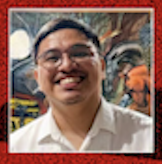
ABOUT THE AUTHOR
Leonard Javier is a student-leader turned doctor-activist and creative storyteller. A graduate of the seven-year INTARMED program of the UP College of Medicine (2019), he was awarded the Hugh Greenwood Award for Community Service and was a finalist for the Ten Outstanding Students of the Philippines–NCR. He served as a rural physician at Ragay District Hospital in Camarines Sur and is now a primary care physician in Santo Tomas, Batangas. He also works with the Community Medicine Development Foundation (COMMED) in rural communities and volunteers with the Institute for Occupational Health and Safety Development (IOHSAD) to advance workers’ health.
Currently, he is a faculty member of the UP College of Medicine’s Department of Family and Community Medicine and co-hosts Second Opinion PH, an independent platform for alternative health discourse. He is also pursuing graduate studies in Medical Anthropology. Beyond medicine, Leonard is a fellow of the 5th La Salle National Creative Nonfiction Workshop, dabbles in poetry, and takes pride in being a “professional tito” to his nieces and nephews, and a fur parent to their four cats. Believing in the power of collective action, he continues to struggle alongside many others for health and rights for all.