I WRITE A LETTER TO SULUS, FROM LAYAG SUG
In 2023, I began writing a series of creative pieces in the form of letters addressed to the Sulus, signing each one as Layag Sug. At that time, I felt a quiet boredom with the genres I had been working on: short stories and poetry. I wanted to move away from what felt familiar. I asked myself a simple question: What if I write creative pieces in the form of letters? That question, unassuming as it was, became the beginning of everything.
My initial target was only two hundred letters. I wrote each letter and posted it on my social media page, never imagining that anyone would wait for the next one. When I reached the two-hundredth piece, readers began leaving comments, encouraging me to continue. They said they were paying close attention to the letters and reading them often, sometimes quietly and sometimes with emotion. Their responses made me realize that the letters were no longer only mine. These letters had begun to belong to others who saw fragments of their lives, their memories, and their identities within the words of the world that never recognized them.
I usually write these letters late at night or early in the morning when the world feels suspended. During those hours, the sea and the wind seem to pause, as if waiting for language. Trees surrounded our house, which stands close to the shore. In those moments, I can almost hear the waves breathing. My hands type slowly on my phone’s keyboard, but my mind drifts across the waters of the Sulu Sea—restless, enduring, never still. I do not write these letters as simple correspondence. When I write, I imagine them as breath—living history, living memory, and a voice that has long wanted to speak to us through our ancestors.
I write because I feel a sense of duty that quietly settles on me. Since childhood, I grew up listening to my mother’s stories about our ancestors crossing the sea by boat from Jolo to Sandakan and about how they recognized islands as part of our maritory. My mother, a poet in her own way and a lullaby singer, used to tell me, “Utuh, when we cross the sea, it becomes our teacher, and our history lives in the waves, the currents, and the ebb.” I would sit on her lap in Jolo, listening to her stories, and even then, I felt that one day I would have to write—not from books or borrowed narratives, but from my experience. She taught me that personal experience is the center of knowledge and that I, having lived these stories, must become a bridge between the past and the future.
I was born into a simple family. My father worked as a tricycle driver before the revolution began in the 1970s in Jolo. Our home was not directly by the sea, but it was close enough that I could walk to it. I grew up with the smell of salt in the air, and the sound of waves became the music of my sleep. One of the houses we lived in stood on stilts—a common sight in Jolo—located in a place called Takut-Takut, not far from the town proper.
From my father, I learned cooperation, respect, and the value of oral history. My father often tells me stories about the revolution he witnessed in Jolo. He described why the fighting began and why people, almost all men, joined the struggle as if I were watching a historical movie. While telling the stories, his eyes become teary. He hopes that history was never written and tells of how these conflicts happened and were rooted in a long history of colonialism. He usually started the story from the Spanish and American periods to the Japanese occupation until the present time, which has never ended, and he was hopeful it will end this time. Every story from my mother, every reminder from my father, and every moment of laughter with siblings and friends in the village became threads that I can use to weave my identity through history. I write these letters with those memories, aware that my words are not only for myself but also for my community and for our future, so that the voice of the Sulus continues to live in the world that usually forgets.
I was not born a writer, nor do I claim to be a particularly good one, and I am still learning how to write better. My curiosity about writing began when I listened to my mother sing lullabies. Her words were spontaneous and beautiful, and I felt an urge to remember them, to keep them from disappearing. My father, on the other hand, loved reading Tarasul, a form of local poetry. Many of the local words were unfamiliar to me. Because of that, I was pushed to ask questions and learn their meanings, as writing has never been easy, especially if words are not that familiar to my ears and understanding.
There are times when I pause, staring at the wall of my room, feeling that my hands are too weak to carry history. But then I remember my mother’s words: “Your hands are like a boat, and your words can be the sail.” So I write—word by word—like weaving a net, like preparing something that must move across water. In my mind, every letter that I write becomes a wave, and every paragraph moves like a tide that makes our stories move forward to tell more stories.
When I write these letters, I anchor them in my identity as a Sulus, also known as Tau Sug. Writing in letter form makes me more aware and, in many ways, more joyful. It allows me to honor our sea, our islands, our maritory, our history, and our culture. I write about ordinary encounters and everyday scenes. I write about people not merely as tricycle drivers or boat owners, but as bearers of knowledge. I write about boats as homes, as schools, and as symbols of movement and quiet resistance. My life teaches me to write from lived reality, not from someone else’s theory. Stories become teachers. Islands become teachers. The community itself becomes a teacher.
Writing these letters also means writing about gender and identity. I am a man, but I write with deep awareness of strong women—especially my mother—who shaped our family and our community. I will write with care. I am fully aware that words have the power to build or destroy. I write to ensure that the women’s voices in Sulu, who preserve our history and culture, are not forgotten and lost. I write their voices like my mother’s. My mother instilled in me the understanding that identity is multifaceted and that writing should reflect that complexity. Although she did not receive a formal education, she acquired a rich education through the oral traditions and knowledge passed down from my grandmother. Even my father taught her how to read the time on a watch using the leaf of our kitchen’s door. From her, I learned that knowledge does not only come from books—it lives in experience, memory, and everyday life.
As I grew older, I began to understand that writing is not only an act of remembering but also an act of choosing—choosing what to carry forward and how to carry it. Each letter becomes a moment of pause, a space where I listen before I speak. I listen to the echoes of conversations with my parents, the laughter of friends by the shore, and the silence that follows stories of loss. Writing, for me, is not about speed or productivity; it is about attentiveness.
As far as I remember, I often walked along the shore of Maubuh in Jolo, a place where people gathered every Sunday for a beach bath. I would see my classmates from school playing on the sand, their laughter carried by the wind, while I listened to the old stories my mother told me. In those moments, something would quietly form inside me. I began to feel that the words rising in my mind were not just thoughts but prayers. I write as a prayer, as acknowledgment, and as living history. These words arise from experience, observation, and memory—from my connection to my parents, my friends, and the culture and history that surround us.
Now, academia and literature inevitably shape the way I write. Yet I always return to what my mother taught me: to place personal and community experience at the center. I have read classical Malay works, contemporary authors, and theories on maritime life and diaspora, but I continue to write from my ground. I write as if telling stories from the peak of Bud Tumantangis, the highest mountain in the Sulu Archipelago—a place I once visited when it was still inaccessible to many. That experience cannot be compared to anything I encounter inside a university classroom. I want these letters to live, not to be buried beneath theories and citations.
The process of writing is long and often exhausting. I write, discard, and write again. I want every word to carry feeling grounded in our truths—not truths imposed from elsewhere. I want every sentence to breathe, every paragraph to bear its wave. Sometimes I sit silently, listening to the sounds of nature, asking myself: Are these words enough to convey our history? Enough to honor our ancestors, our community, and our identity? Then I realize that writing is a journey, not a destination—perhaps a destination I will only reach far into the future.
I write because I want to leave something for the next generation. I believe young Sulus must know that their identity is valuable, that their sea, islands, and culture cannot be taken by anyone. I write so that they—and I—may feel pride, so that we learn from our experiences rather than from foreign narratives. I write so that our history belongs to us, not to others.
Every word in these letters is born from dialogue—with my mother, with ancestors, with elders I encountered from elementary school to high school and college, though I speak of them as if they are beside me now, with friends in the village, and with students who may one day read this. I write with the awareness that these words must serve the community, not merely the ego of the writer. I write because I believe words have power: to connect, to preserve identity, and to resist narratives that oppress.
I also write as a form of self-reflection. I know I write from a specific position—as a man, as an academic, as a child of the village, and as a child of a lower-middle-class family. This position shapes how I write about history, culture, and identity. My mother taught me to be honest about this position, to write with the awareness that every personal experience is part of a collective history.
I remember a time when I was on an airplane traveling to Manila, feeling the air currents brush against my face, writing in a very small, worn notebook. I did not have a phone then. I wrote about how my eyes had witnessed the resistance of our ancestors through memory, about how my mother became my first teacher, and about how our community weaves the stories of life. I wrote about friends at the port of Jolo, about women weaving pis siyabit, and about children crying aboard boats during the burning of Jolo, so that none of the stories would be lost in a wilderness of times.
I wrote about life because I believe it is the bridge that connects the past, present, and future. These words become a bridge, and I feel responsible for making that bridge strong and sustainable. My mother taught me to write from direct experience, from memory, and from the breath carried by the wind. I write so that we remain connected, so that our identity continues to live.
My family, class, and community shape every letter. I remember childhood moments when my father taught me how to mend fishing nets as if he were teaching me the alphabet, his words flowing with a quiet literary rhythm. I remember my mother recounting our ancestors’ histories and my friends taking me across the sea in a small boat to Bangas, an island facing Jolo. All of these moments become sources of words, inspiration, and the spirit of these letters. I write as if their hands, their voices, and their experiences are embedded within me.
I write these letters like weaving a net across an endless sea. Word by word becomes a knot, sentence by sentence a line, and paragraph by paragraph the net itself. I want these letters to connect generations, communities, and identities, because I believe words can become vessels and sails, bearing our history forward.
As I continue writing, I realize that these letters are not only addressed to the Sulus as a collective but also to the many versions of myself that have existed across time—the child walking barefoot on the shore, the student learning to speak in classrooms shaped by distant centers of knowledge, the son listening carefully to his mother’s voice at night, and the academic negotiating between institutional expectations and community responsibilities. These selves do not contradict one another, as they converse, argue, and reconcile within the space of these letters.
There are moments when I ask myself, who am I to write? Then I remember that, in our tradition, writing is not about authority but responsibility. It is not about claiming mastery but about bearing witness. I do not write to speak over others, but to speak with them, and sometimes to speak after them—so that what they have said does not disappear with the tide of forgetting. This is how my way of writing teaches me: not from distance, but from immersion; not from abstraction, but from lived reality.
I am aware that my position in the university grants me access to languages, platforms, and audiences that many from my community do not have. This awareness humbles me. It reminds me that every paragraph must remain accountable to the people whose lives shape these words. I cannot afford to romanticize suffering nor simplify complexity for the comfort of outsiders. I must write carefully, listening deeply, ensuring that my words do not betray the trust of those who shared their stories with me—sometimes over coffee, sometimes by the shore, sometimes in moments of grief.
Gender also shapes how I write. I am conscious of how women in my community—my mother, my aunts, the weavers, the storytellers—have supplied me knowledge quietly, often without recognition. Their strength does not announce itself. Their strength endures. My writing owes much to their patience, their labor, and their ways of remembering. I hope my voice will be heard today, because it is their voice that sustained the ground beneath me. To write without acknowledging their voices would be to write incompletely.
Class has taught me discipline. Growing up with limited means trained me to notice silence, endurance, and resourcefulness. It taught me that stories are not luxuries; they are necessities. When material things were scarce, words became shelter. Stories explained loss, softened hardship, and gave meaning to struggle. That is why I continue to believe that writing is not detached from survival—it is part of it.
Ethnicity, for me, is not an abstract label. It is felt in language, in gesture, and in the way memory returns. It is felt in how the sea is never just scenery but livelihood, boundary, and archive. When I write as Layag Sug to Sulus, I do not claim purity or fixity. When I write from movement, from crossings, and from encounters, our identity will always be shaped by currents—historical, cultural, and emotional.
There are times when I feel torn between worlds. Academia asks for distance, structure, and theory. My community asks for closeness, sincerity, and truth. In writing these letters, I try to remain grounded. I refuse to let theory erase experience. I refuse to let polished language smooth over pain. Instead, I write as someone who has lived, who continues to live, and who remains accountable to where he comes from.
I am aware that my access to education and platforms gives me a certain privilege. That awareness humbles me. It reminds me that every sentence must answer not only to readers but also to the people whose lives shape these words. I cannot afford to romanticize struggle or simplify history. I must write carefully, listening deeply, making sure that my words do not betray the trust of those who shared their stories with me—sometimes at the shore, sometimes over quiet conversations, sometimes in moments of grief.
These letters, then, remain unfinished by design. Like the sea, it refuses closure. It moves, returns, and reshapes itself. There will always be more to remember, more to listen to, and more to write. And perhaps that is the point. Writing, like identity, is not something we complete. It is something we continue—patiently, responsibly, and together.
 ABOUT THE AUTHOR
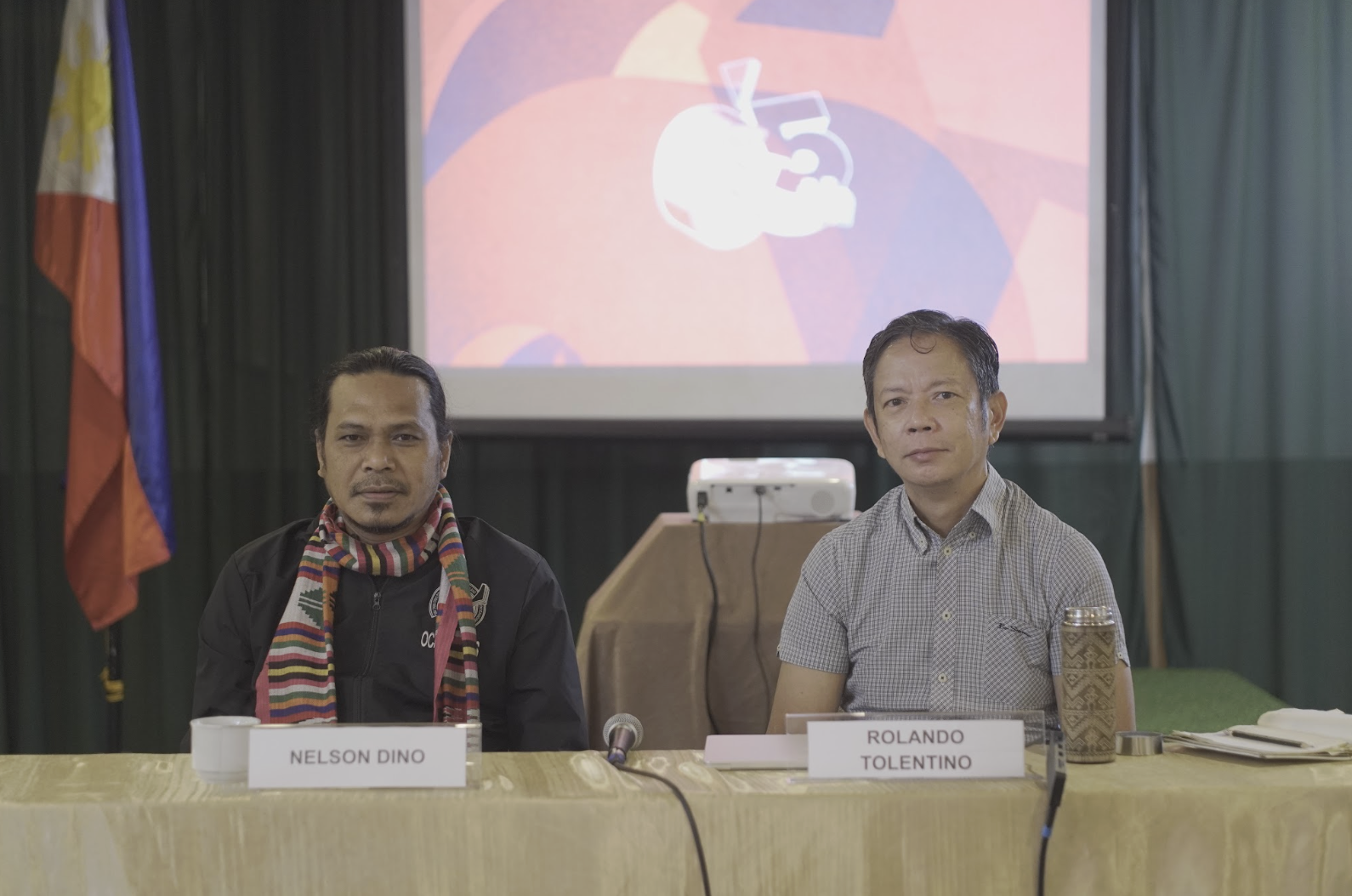
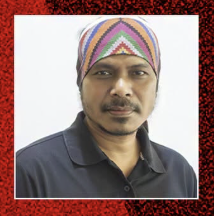
Nelson Dino is a Sulus cultural worker and educator from Bongao, Tawi-Tawi. He serves as the Director of the Office of Creative Works and a faculty member in the Department of Literary and Cultural Studies at the College of Arts and Social Sciences at Mindanao State University–Tawi-Tawi College of Technology and Oceanography (MSU TCTO). His work focuses on Sululogy, a narrative approach that prioritizes Indigenous Sulu voices, memory, and lived experiences rather than relying on externally imposed frameworks. Through essays, letters, and cultural criticism, he examines themes such as maritory, faith, language, visual arts, and everyday life in the Sulu Archipelago. Deeply committed to cultural advocacy and community-based education, Dino’s writing champions the right of the Sulus to narrate their own stories—not as explanations for outsiders, but as acts of remembrance, witness, and reconnection for his community.