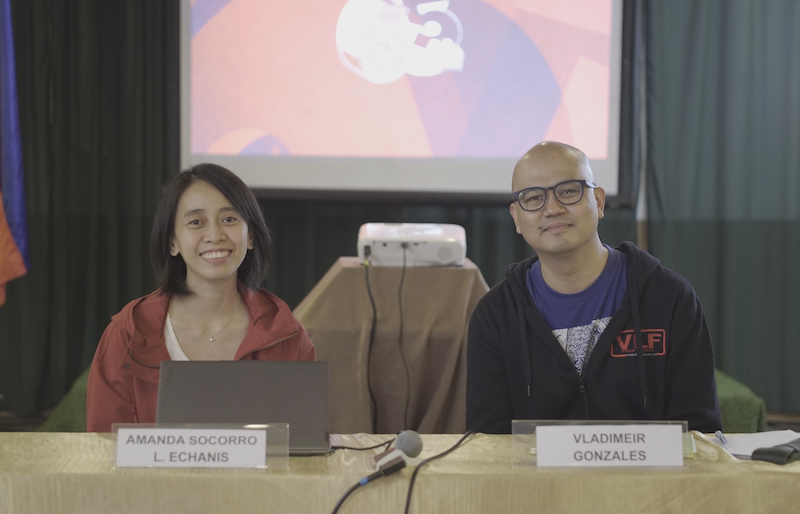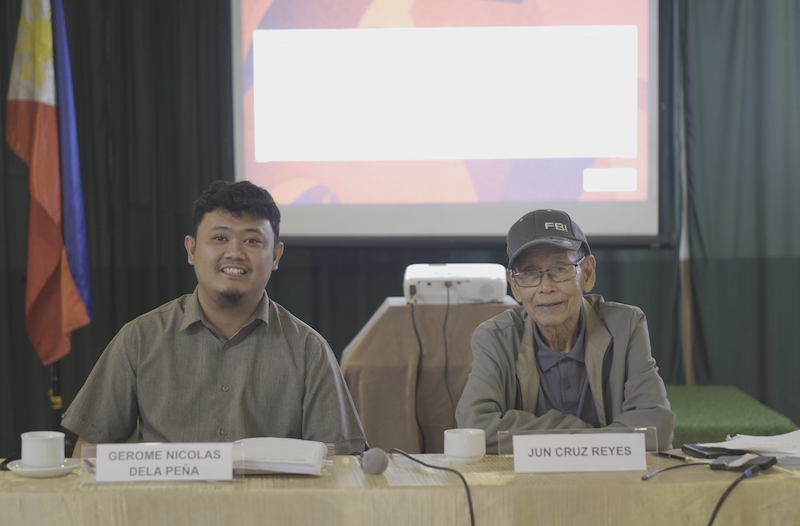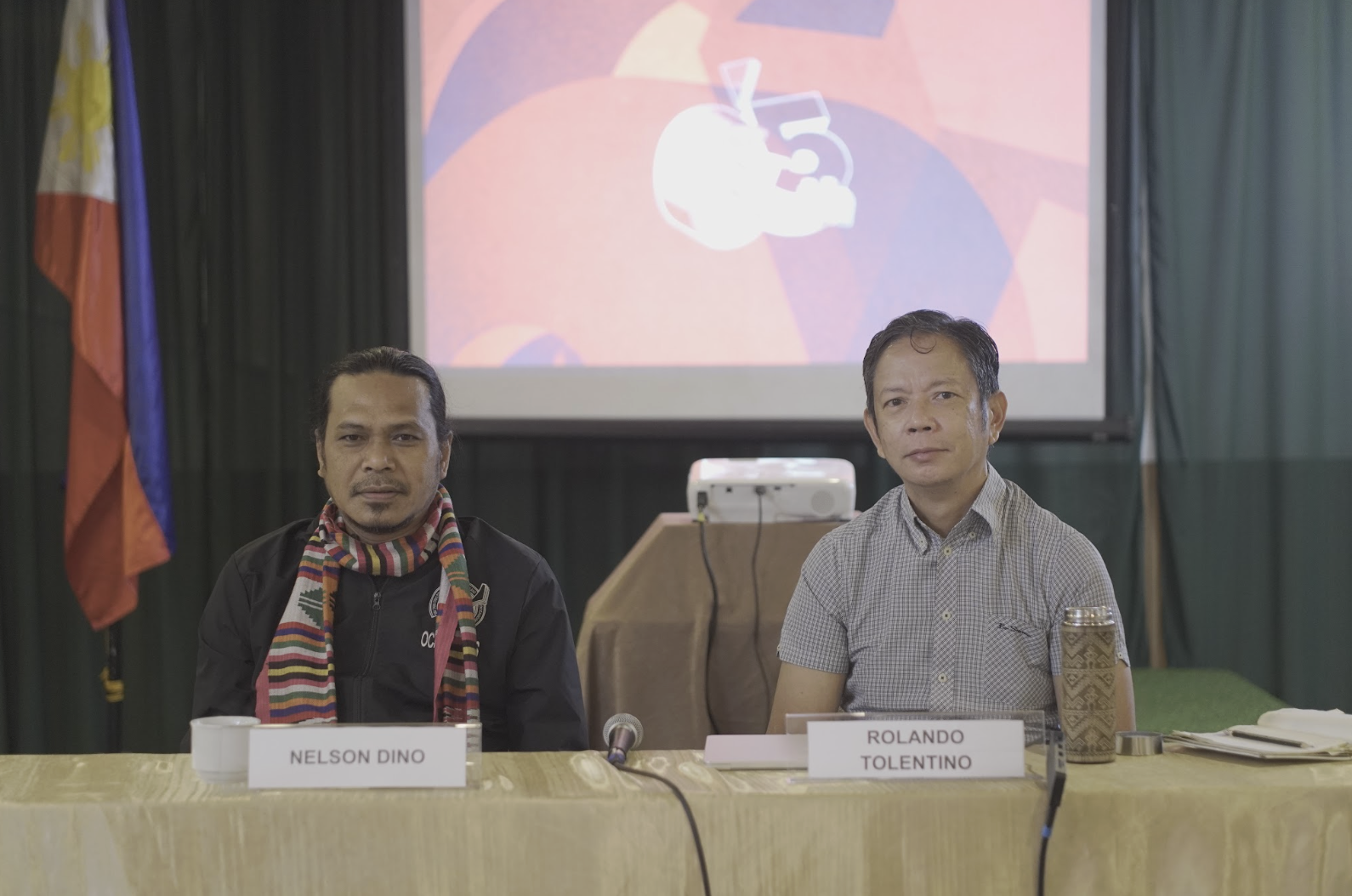
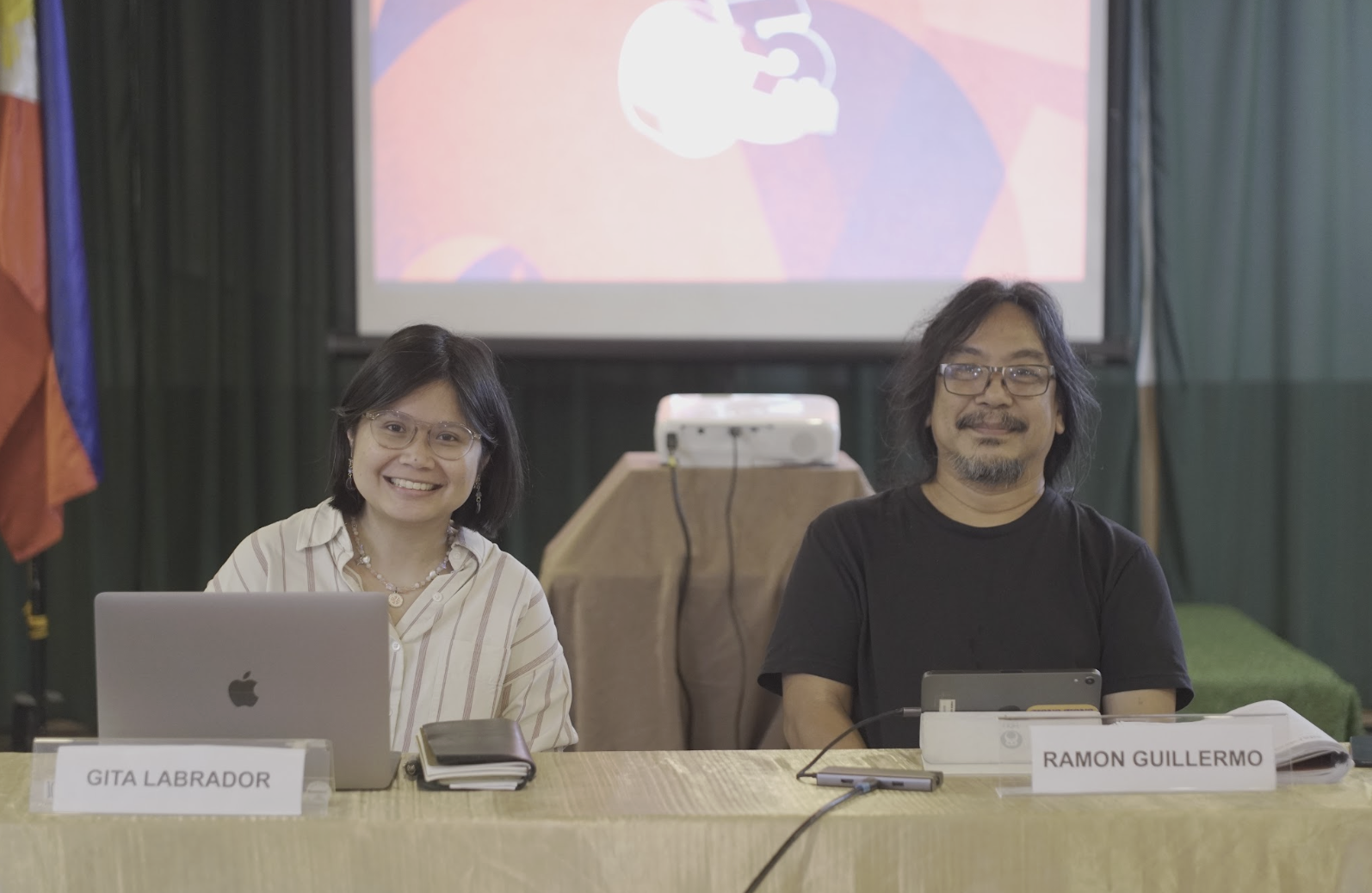
Workshop Session 9, 65th UPNWW: Listening Exercises by Gita Labrador, Fellow for Poetry
Moderator: Ramon Guillermo
Written by Danielle Veniegas
“There’s a lot to study in sound, a lot to artistically portray in sound. Especially in terms of social justice.”
To introduce Gita Labrador’s poetry suite Listening Exercises, Dr. Ramon Guillermo linked Canadian composer and writer R. Murray Schafer’s idea of the “soundscape” to “acoustic ekphrasis,” which is the translation of the sonic and the auditory to written language. Sound, he contended, has always been important to writers, quoting Emmanuel Lacaba— “…sabi nga ng isang kilalang makata, ang ulan ay hindi mawawala kailanman sa ating panulaan.” He also cited how audio-ballistics helped implicate the IDF (Israel Defense Forces) in the 2024 murder of Hind Rajab, demonstrating how soundscapes and sound studies might play an important role in power, resistance, and social justice—the central concerns of Labrador’s project.
Labrador anchored her poetics presentation in the idea of the more-than-human: “entanglements among human, animal, plant, ecological bodies and systems”—a deliberate challenging of the traditional human versus non-human binary. Her love for long walks in nature and the outdoors cultivated in her the profound art of listening—of noticing, processing, and acting. Through her poetry, she unspools and resolves such entanglements, in the process laying bare our modern environmental, agricultural, and political crises—“In the process of crafting a poem, I can allow myself the space to reflect on these violences, the bodies that experience them firsthand, and the ways in which I find my life entwined with theirs.”
Fellows had much praise for Listening Exercises, with Pia Montalban tagging the suite as tula ng testimonya—“Hindi lang siya tungkol sa pakikinig, kundi sa pag-uunawa. Kung paano tayo materially entangled.” Meanwhile, Leonard Javier and Jan Dennis Destajo commended Labrador for recognizing that the personal and the political exist not as opposing forces, but in the same spheres and networks. The latter emphasized how it politicizes the mundane and quaint concerns of modern life, and that the “…best poems exist in discrepancies and contradictions.”
On Labrador’s complex feelings towards being a Filipino poet writing in English, Dr. Romulo Baquiran Jr. contended that writers such as Jose Rizal and NVM Gonzales have already answered “the question of language.” While Dr. Will Ortiz praised the suite’s “bittersweet” quality, she also disfavored the listing of the names of dead peasant women in “Listening Exercises”—“…baka pwede pang may ibang paraan upang buhayin muli?” Dr. Rolando Tolentino also noted that the suite lacked the urgency and acute melancholia suited to its subject matter, suggesting that this might be resolved by engaging more deeply with the simultaneities and cacophonies of sound. Lastly, Dr. Eugene Evasco invited Labrador to consider writing children’s poetry, as she seems well-versed in its language, strategies and techniques, and images.
To close the session, Gita Labrador thanked the fellows and panelists for the valuable feedback, disclosing that she feels poetry is a “…continuous process of overcoming.”
Listening Exercises: Towards a More-than-human Poetics by Gita Labrador