Writing as an act of reclaiming
‘I’m looking for someone I can hire who’s willing to rape another man,’ I once typed in an Omegle chat to a random user. This was in 2017, when a friend of mine disclosed something she had never dared to tell anyone but me: she had just been raped.
At the time, I was in graduate school, one thesis away from earning my MS in Clinical Psychology, and teaching part-time at a university. I handled several psychology courses, and in one class, I grew concerned when a female student suddenly stopped attending. She was intelligent and actively engaged, often offering insights beyond her years, so her absence was noticeable. When she returned weeks later, she waited outside the classroom and asked to speak with me privately. Holding back tears, her voice trembling, she told me she had been raped.
The proximity of these disclosures made me intensely aware of how frequently women are sexually assaulted, perhaps far more often than we would ever know. My friend was gentle and warm; my student was bright and conscientious. They were good people who deserved only kindness in return. Knowing what they had endured unsettled me profoundly and disrupted my meaning-making of the world. It felt as though a lightning bolt had struck the ground beneath me, shattering my concept of reality and eroding my faith in humanity.
I searched for ways to help my friend. I told her we could find a lawyer and that I could refer her to a psychologist. I reached out to a batchmate from another college who had become a lawyer; she advised consulting the Public Attorney’s Office and told me to return to her if further assistance was needed. But my friend refused to file a case. I continued to explore options and consulted a senior psychologist on what to do. This male psychologist told me that my friend was not in the right state of mind and that I should convince her—by all means—to pursue legal action. That made me pause, then I asked myself what I was truly trying to achieve. Who gets to decide what must be done? My friend had given a firm no, not out of helplessness, but as a way of protecting herself. It was a choice she made in the exercise of her own agency. I came to my senses. I abandoned the idea of hiring someone to rape a rapist (which I never told my friend), but the fact that I had even considered it confronted my morals.
I found myself turning to the solitary activity of writing.
For years, I taught myself how to write and tell stories by reading novels and watching films, which were the most accessible avenues available to me. As a psychologist, however, I found myself deeply averse to narratives that turn trauma or human suffering into spectacle. I became increasingly discerning about what works, and what fails, in the kinds of stories I wanted to write. Many writers claim to write in the service of art, and for a long time, I wanted to subscribe to that idea. Yet I found it impossible to compartmentalize being a writer from being a psychologist, with all the ethical obligations the profession entails. I am also not in a position of privilege to write solely for artistic merit, recognition, or entertainment when my clinical practice exposes me daily to people living with profound suffering. I chose instead to embrace being both psychologist and writer—as a union. I see myself as someone who uses language as a psychological instrument: to name, narrate, and restructure inner experience, in hopes that others may recognize themselves and find healing through meaning.
In 2023, I completed a full-length manuscript, which I decided to self-publish. This decision was not born of vanity, as I believed it was my only viable path, given my lack of formal training in academic creative writing, which traditional publishers often prefer. The novel follows a neuroscientist who develops a speculative technology that allows her to clone her memory of sexual assault and potentially implant it into the mind of her perpetrator. While the premise gestures toward science fiction and revenge, the work is ultimately about a woman reckoning with sexual abuse and the fragmented nature of memory, while resisting reductive narratives of recovery. Healing is not rendered as linear or redemptive, but as a more honest form of reclamation—one that accommodates anger, grief, and moral ambiguity. It also tackles the burden of empathy and witnessing. Writing the novel required careful attention to how trauma inhabits both body and mind, and to how fiction might approach such material without aestheticizing harm. The manuscript received a publication grant from the National Book Development Board, affirming that the importance I perceived in the work was not merely imagined. While deeply grateful, the grant also placed pressure on me to further refine my craft. I am currently undertaking a substantial revision for possible future traditional publication of my first novel. This revision is not cosmetic but structural and ethical: a stripping away of sentimentality, a reassessment of narrative authority, having recognized the limits of both the original publishing context and my own earlier compromises.
My first novel is the opening installment of a long-form project—a psychological trilogy examining trauma, moral ambiguity, and restoration across both personal and systemic dimensions. The manuscript I am submitting to this workshop constitutes the second installment. It extends my inquiry from the individual into the collective, centering on a psychologist who assists the National Bureau of Investigation in probing a vigilante cult responsible for liquidating corrupt politicians under the guise of national purification. The narrative interrogates how moral certainty curdles into violence, how trauma can be weaponized into ideology, and how societies rationalize brutality when institutions fail. While the work incorporates elements of crime, mystery, and speculative realism, its core remains psychological. I am drawn to the erosion of personal values, the seduction of belonging, the meaning embedded in worldviews, and the fragile spaces where individual and collective healing may still be possible.
In 2024, I was accepted into the Fifth La Salle National Creative Nonfiction Writers’ Workshop for Health Care Professionals and Medical Interns. For this workshop, I had written an essay about my high school classmate and friend who died by suicide in September 2019, which also tackled the grief that I continue to carry. It is confessional, not for attention, but to honor and preserve the life he had lived, and as for me, to (re)discover pieces of myself by articulating the survivor’s guilt. My commitment to professional accountability has sharpened my ethical discernment as a writer. This workshop clarified for me that craft is inseparable from responsibility—a principle that continues to shape my fiction, particularly when writing from lived realities and vulnerable inner lives.
In 2025, I was accepted as a fellow for fiction into the 63rd Silliman University National Writers’ Workshop. During the panel discussion, the workshop director shared that while screening applications, he read one of my pieces—a speculative historical fiction about Hilaria Aguinaldo, the first First Lady of the Philippines—and immediately thought, “I already have one fellow.” Through this story, I seek to reclaim Hilaria from her absence in official historical records by reimagining her labor and sacrifices not merely as Emilio Aguinaldo’s wife, but as a woman with her own agency who supported the revolution. My interest in women in Philippine history has propelled me to write about unrecognized and forgotten female figures omitted from historical texts. I aim to produce a collection of short historical fiction, not as a form of historical revision, but to reclaim voices and interior lives where history has fallen silent, and to interrogate the dominant patriarchal narratives.
Across all my work, writing is an act of reclamation. I write at the intersection of psychology and literature to make sense of worlds that have been fractured. I approach language as an instrument of inquiry: a way of understanding how meaning is recovered and how lives—often fragmented by violence or erasure—can be gathered into form. I continue to seek spaces where I can learn how language might be pushed closer to what it is trying, and often failing, to hold, and how far a story can go without betraying the lives, histories, and inner worlds it seeks to illuminate.
Like a new chapter in a book, my friend, whom I mentioned at the beginning of this essay, has begun a new life in another country. She bought a copy of my first book, and later I saw her Instagram story: my book photographed against the landscape of trees and a vast blue sky, captioned with, “Thank you.” Once, she messaged to tell me she was rereading it. And once in a while, I receive private messages on Instagram from women I do not know—readers who tell me, simply and quietly, “Thank you for writing this.”
ABOUT THE AUTHOR
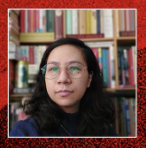
Allene Allanigue is a writer and a practicing psychologist. She was a fellow at the Fifth La Salle National Creative Nonfiction Writers’ Workshop for Healthcare Professionals and Medical Interns, and a fellow for fiction at the 63rd Silliman University National Writers’ Workshop. Her debut novel, Her Last Cigarette Yesterday, was self-published in 2023 with partial support from the National Book Development Board through a publication grant.
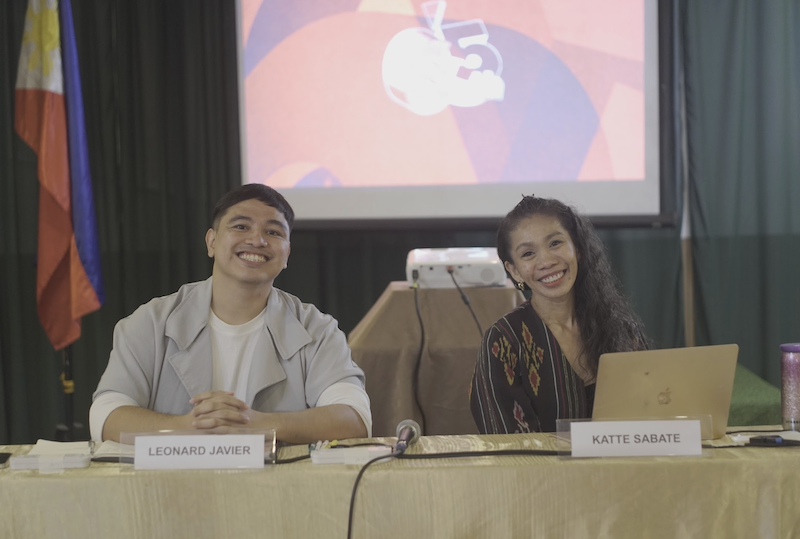
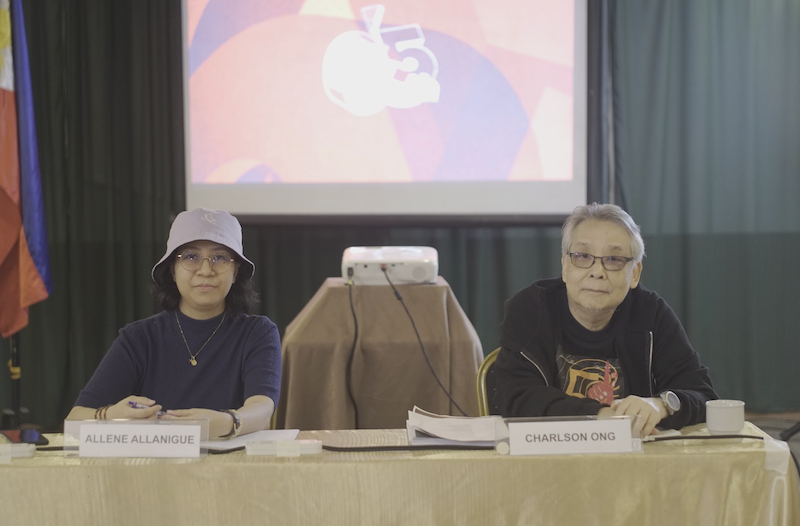
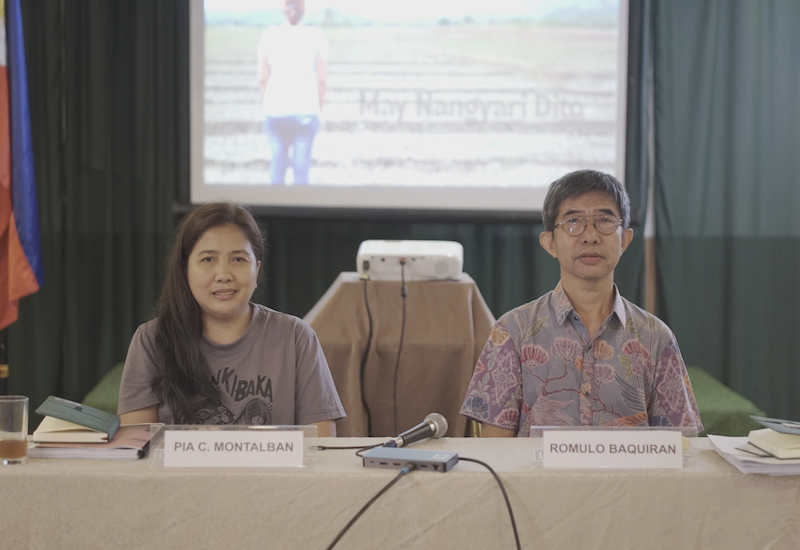
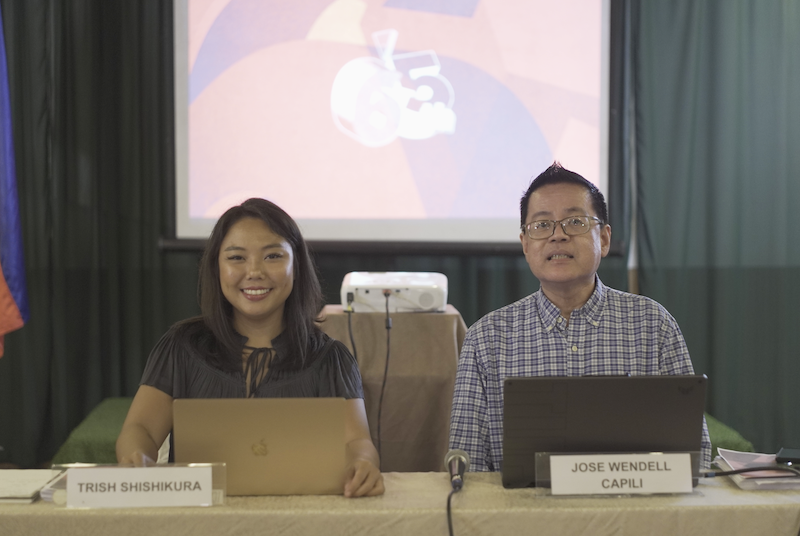
Workshop Session 4, 65th UPNWW: Her Shadows in Daylight by Allene Allanigue, Fellow for Novel