Session 7: The Memory-Keepers
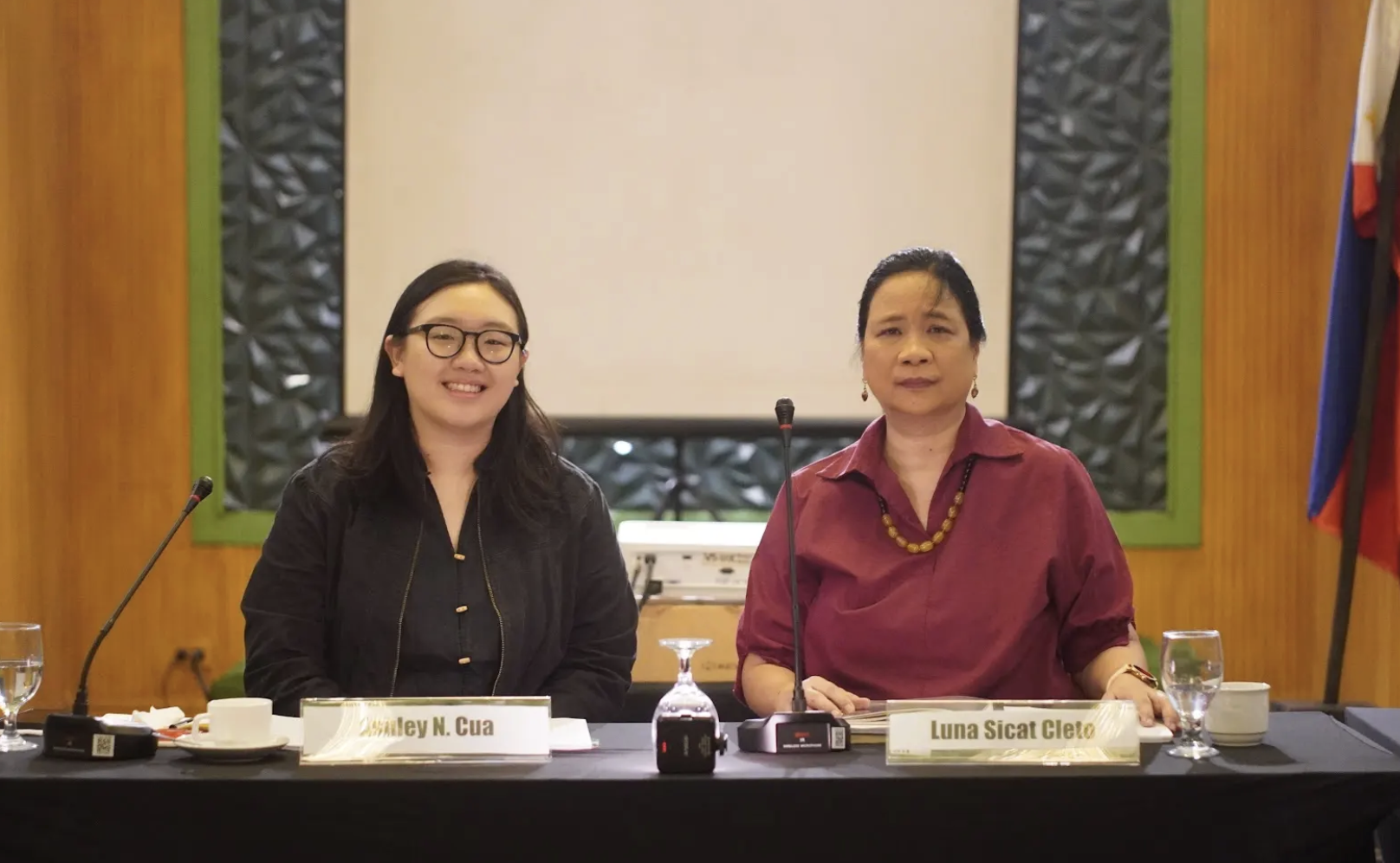
Fellow: Ashley Cua
Moderator: Luna Sicat Cleto
“Akala natin ipinanganak na silang matanda, pero mayroon silang pagkabata. At sa pagkabata nila, nasisilip natin kung ano-ano ang kanilang naging mga desisyon.”
In her introduction to Ashley Cua’s The Memory-Keepers, Dr. Luna Sicat Cleto highlighted what, in her view, is the novella-in-progress’ beating heart—its linking of the present to the past, affording its adolescent characters a rare, insightful glimpse into the lives their elders have lived. Bestowing a consciousness and voice to forces of nature—in this case, trees as the work’s eponymous “memory-keepers”—is hardly new or original; however, Sicat Cleto contended that the work is clever in its remobilization of the bond between human beings and their natural environment, forgotten amidst our modern, developed world.
The Memory-Keepers drew much praise for having been written in a simple, lyrical style layered with meaning. Fellow Maria Araceli Baygan appreciated its depiction of how children are often caught in the crossfire of serious adult conflicts, noting the quiet, simmering rage underneath the poetry of the language. The work’s themes of environmentalism and ecological agency also resonated with the fellows, with Peter Grumo recalling the Southeastern Mindanaoan belief that, before felling tall trees, one must first solicit permission from the spirit residing inside.
One prominent point of criticism was the work’s underdeveloped plot points and mechanisms, particularly regarding how tree sap is able to retrieve and elicit memory. Elyrah Salanga-Torralba advised Cua to expand the trivial but potentially fertile detail of how the sap is harvested, while Erik Pingol found the work still lacking in verve and momentum despite capturing the “sweet and beautiful” innocence of youth. Christopher Rosales also suggested that Cua might consider thematic subversion: “Puwede kaya ituring lason ang alaala?”
In contrast, Caris Avendano Cruz and Eugene Evasco expressed appreciation for the work’s delightful ambiguities. However, the latter also found The Memory-Keepers to be unconvincing as children’s literature, advising Cua to enliven her work with playfulness and a sense of wondrous joy. Will Ortiz also recommended that she commit to personification and endow the trees with distinct characteristics, citing the Ents’ incredibly slow manner of speaking in J.R.R. Tolkien’s seminal The Lord of the Rings.
Fellow Ashley Cua thanked the fellows and panelists for helping her view her novella-in-progress “with new eyes.” Witnessing the degradation of the Pasig river and the waterways of Manila, she revealed, had been the impetus of the project. In wondering if restoration or renewal is possible, Cua emphasized that she wishes not to romanticize the past but instead urges readers to step up, to “…remember [the past] and work to make that their reality.”