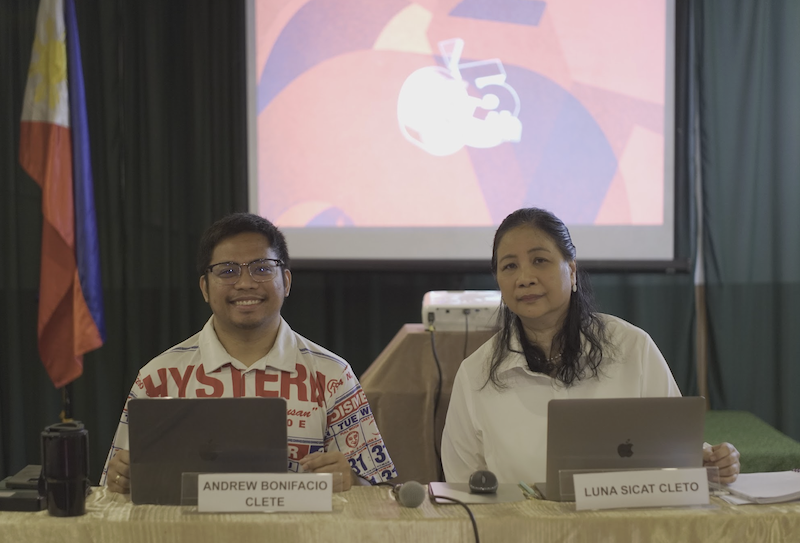
Workshop Session 7, 65th UPNWW: Drags Ol Ober Da World ni Andrew Clete, Fellow sa Dula
Moderator: Luna Sicat Cleto
Written by Danielle Veniegas
“A playwright is not simply someone who writes dialogue. A playwright is someone who tends to think in terms of behavior under pressure, bodies in space, time, silence, conflict, and what an audience can perceive without being told.”
To open Workshop Session 7, Dr. Luna Sicat Cleto first issued the disclaimer that, while she is primarily trained in the realist tradition of playwriting, it might also be productive to interrogate if and why realism is still “effective” in the modern context. She then outlined ways in which the playwright thinks differently from other types of writers, from their preoccupation with entrances and exits, reversals, and dramatic contradictions to what is hidden versus shown. Cleto ended her craft lecture with several thoughtful considerations on playwriting and Andrew Bonifacio Clete’s one-act play Drags Ol Ober Da World: “Nakanino ba ang kapangyarihan? Nakanino ba ang tinig? Kaninong tinig o memorya ang nananaig? At ano ang hindi maaaring sabihin?”
In Clete’s poetics presentation, “Mothering,” he lifts up the mother as a social and ideological identity, as well as a conscious practice—hence, its importance in drag and the wider LGBTQIA+ culture. In recounting his career and development as a playwright, he enlisted the staff of the Likhaan: UP Institute of Creative Writing to deliver dramatic readings of Labada, Pangarap Kong Maging Manananggal, May Ginto?!, and Punks Not Dead!, which was also featured in the Likhaan: The Journal of Contemporary Philippine Literature, Volume 17. Clete closed with the emphatic statement that writing is a form of “mothering”— “Nanay tayong mga manunulat na paulit-ulit na nagpupuyat para magrebisa at mag-alaga ng mga akda.”
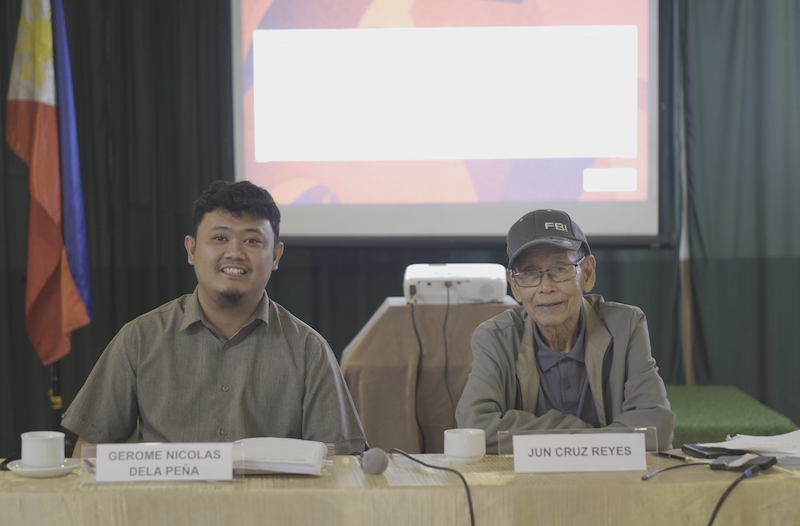
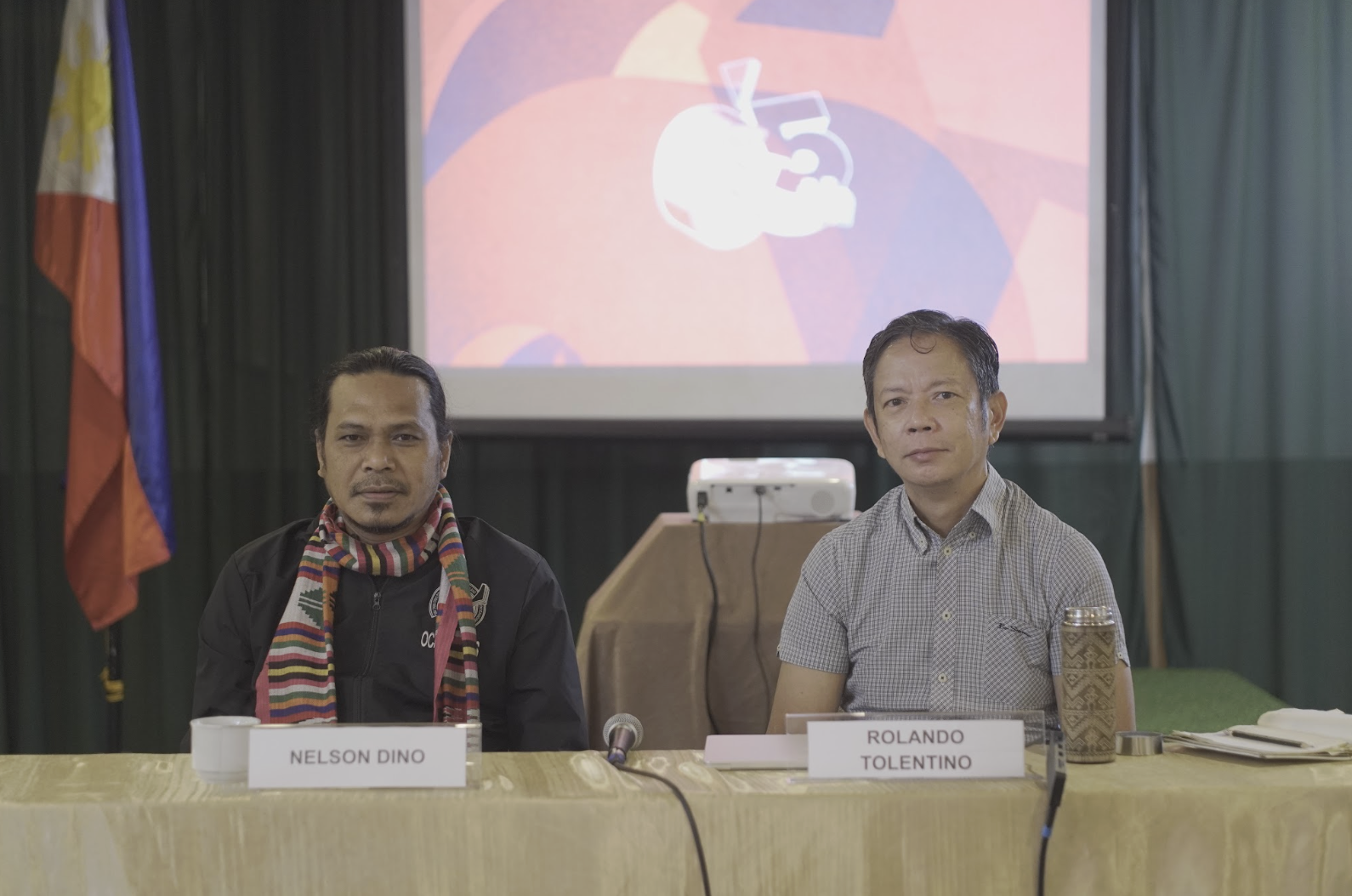
Several panelists raised concerns over political and ideological aspects of the work. Dr. Will Ortiz cautioned against romanticizing the traditional, impossible ideal of the mother—“Yung magbibigay ka ng buhay, pero papatayin mo rin sarili mo.” Meanwhile, Dr. Rolando Tolentino urged Clete to work towards mimesis—despite the work’s awareness of drag as self-reflexive artifice, it also needs to engage more deeply in its themes of real-world violence, precarity. and other forms of social malaise. On a related note, Dr. Ramon Guillermo pointed out the work’s uncritical and perhaps unintended appropriation of rhetoric that are often deployed against the LGBTQIA++ community. He also issued the reminder that queer gender identities do not necessarily preclude progressive personal politics.
Fellow Leonard Javier commended the work for how it engaged in drag culture, particularly its attempt to “…deal with tragedy and trauma through transformation.” However, he also advised Clete to substantiate the class and social status divides between the characters, so as to make them more distinct. Among other concerns were Ralph Jade Tampal’s observation that the dialogue is perhaps too formal and does not sufficiently reflect queer culture in the Philippines.
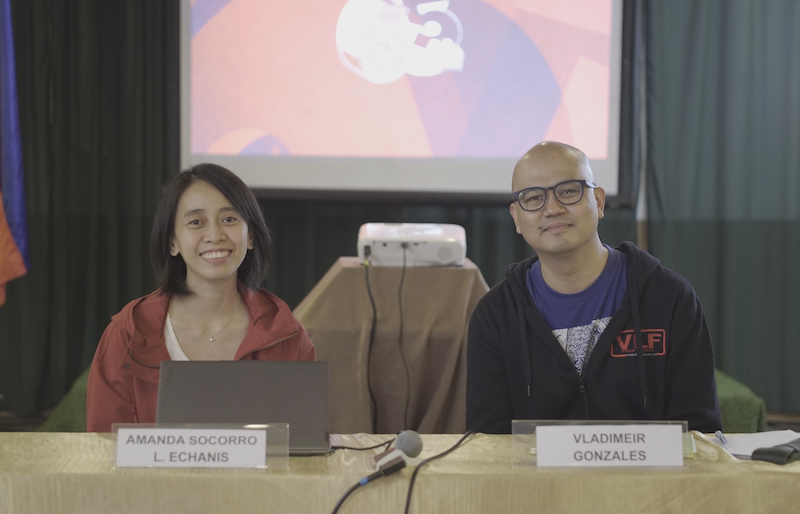
As theatre practitioners, Katherine Sabate and Vladimeir Gonzales touched on considerations regarding the work’s staging and production. Sabate advised Clete to be more careful in his assumption that audiences are already familiar with the culture and conventions of drag, as well as to keep in mind the practical aspects of wardrobe changes. While Dr. Gonzales acknowledged that one-act plays can lean unnatural and overly expository—“Kailangan matawid ang message in 40 minutes”—he also advised Clete to recalibrate his language. Lastly, Eugene Evasco pointed out how it is perhaps time for Clete to challenge himself and release Drags Ol Ober Da World as a full-length play.
To close the session, Clete stated that he accepts the challenges and suggestions, describing playwriting as continuous collaboration and refinement—“…isang mahabang proseso ng pagpapakawala.”